
J.S. MADE is a New York furniture studio designing and building original hardwood furniture.
We make furniture in New York from solid hardwood, one piece at a time. We pay attention to the things that make the material worth seeing — the grain, the weight, and the small differences from board to board — and let those things stay present in the finished work.
Our work is built around strong proportions, visible construction, and pieces that feel calm without disappearing into a room. We keep production limited so we can stay close to every part of the process, from the first cut to the final surface.
J.S. MADE was founded by designer and furniture maker Jefferson Acevedo with a simple goal: to make furniture with enough character and presence to be lived with for a long time.
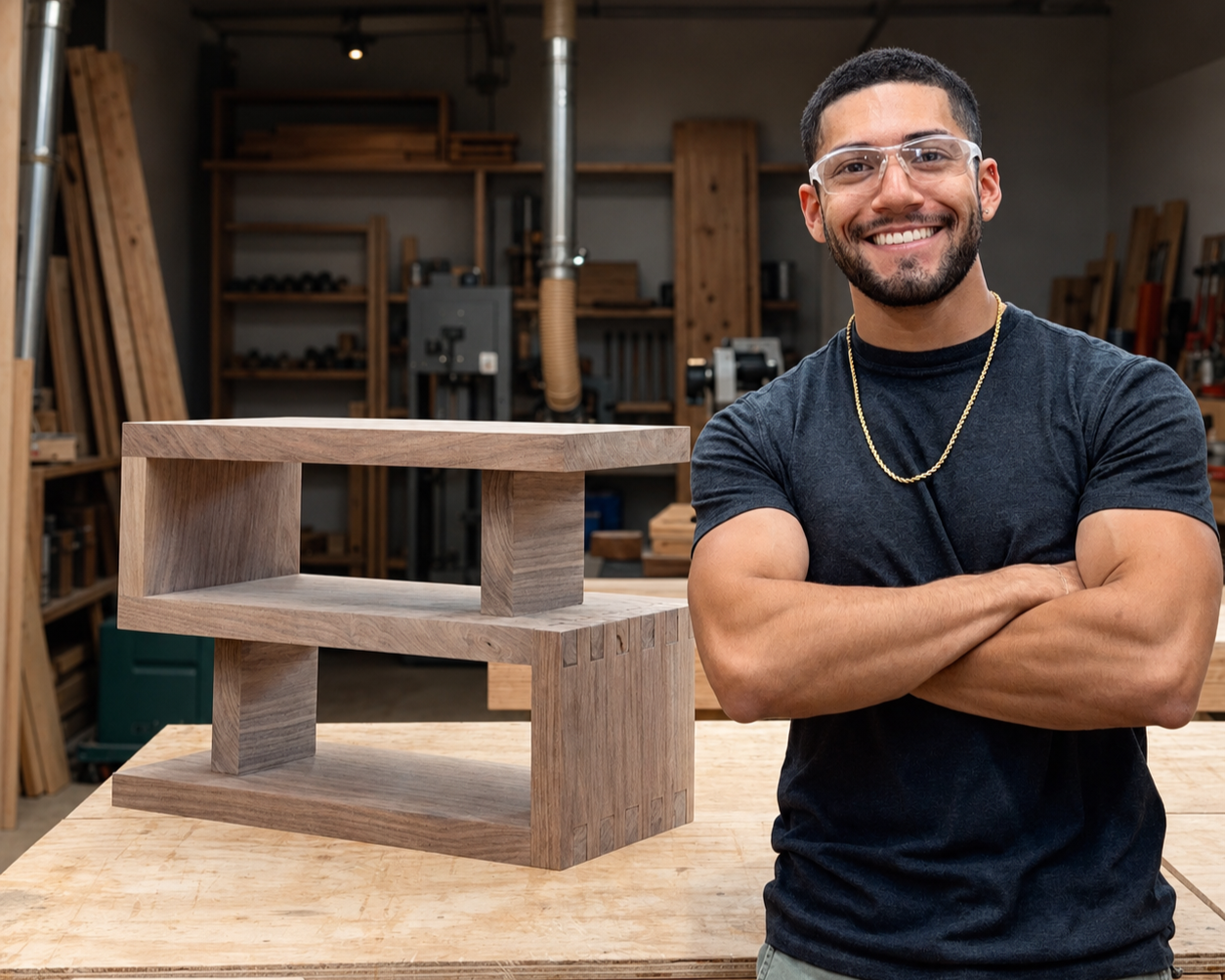
From wood to finished piece.
We start with solid hardwood and work from what each board gives us. The grain, weight, and color of the wood influence where parts land and how the piece comes together.
We take our time with the fit, joinery, sanding, and finish because those details are what you notice up close. We don’t hide the construction; we let it become part of the piece.
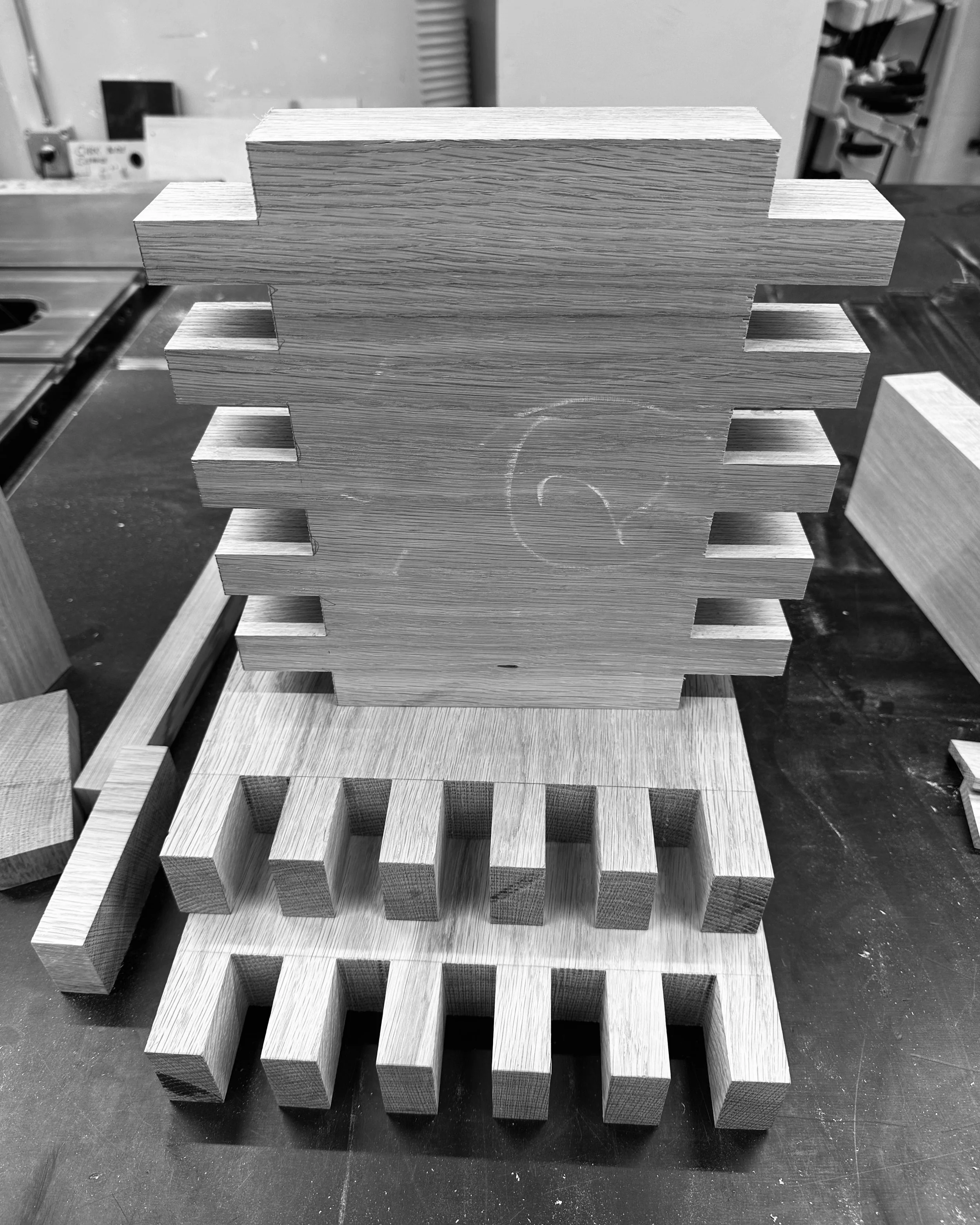
Joinery as structure, not decoration.
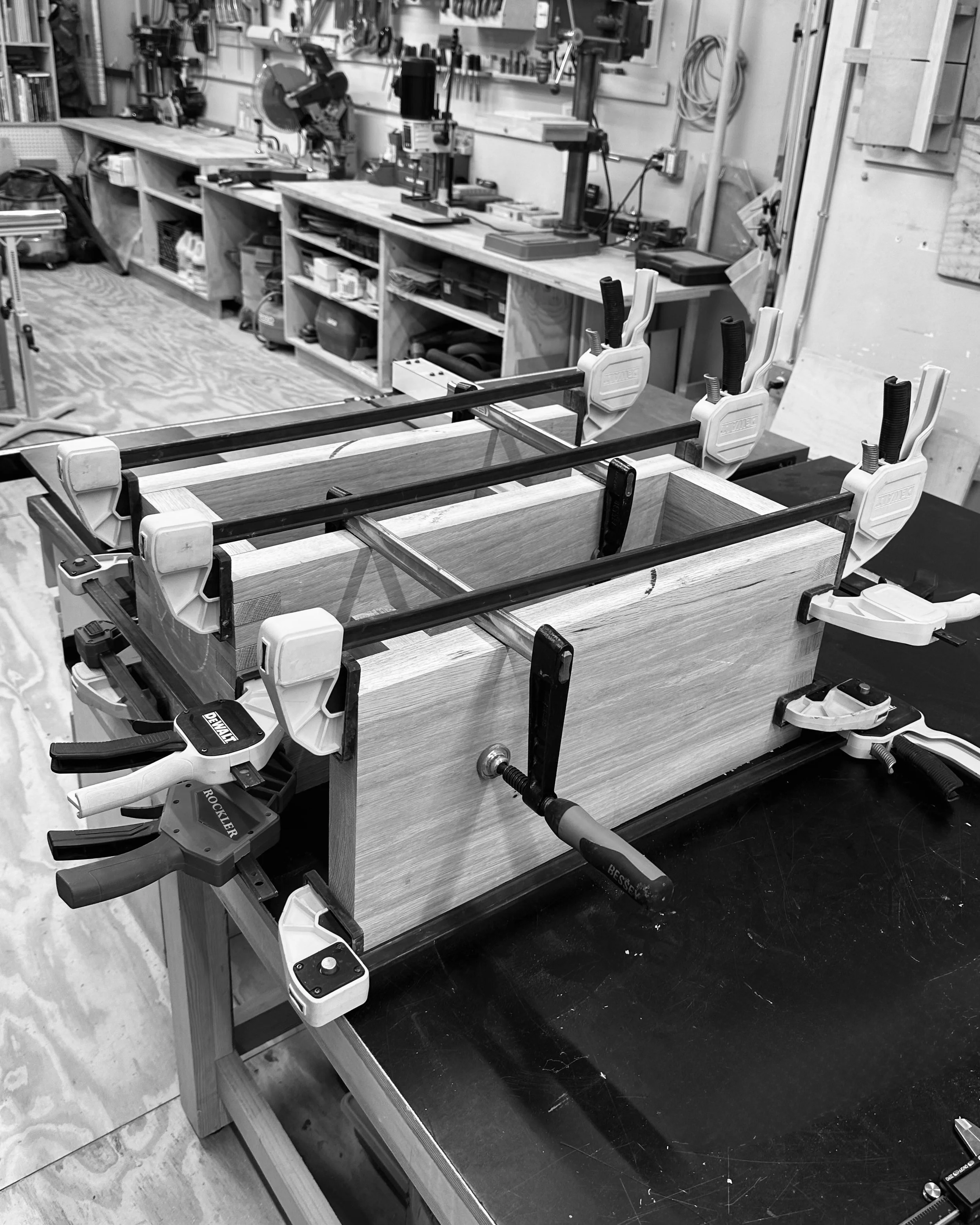
Each piece is fitted and assembled by hand.
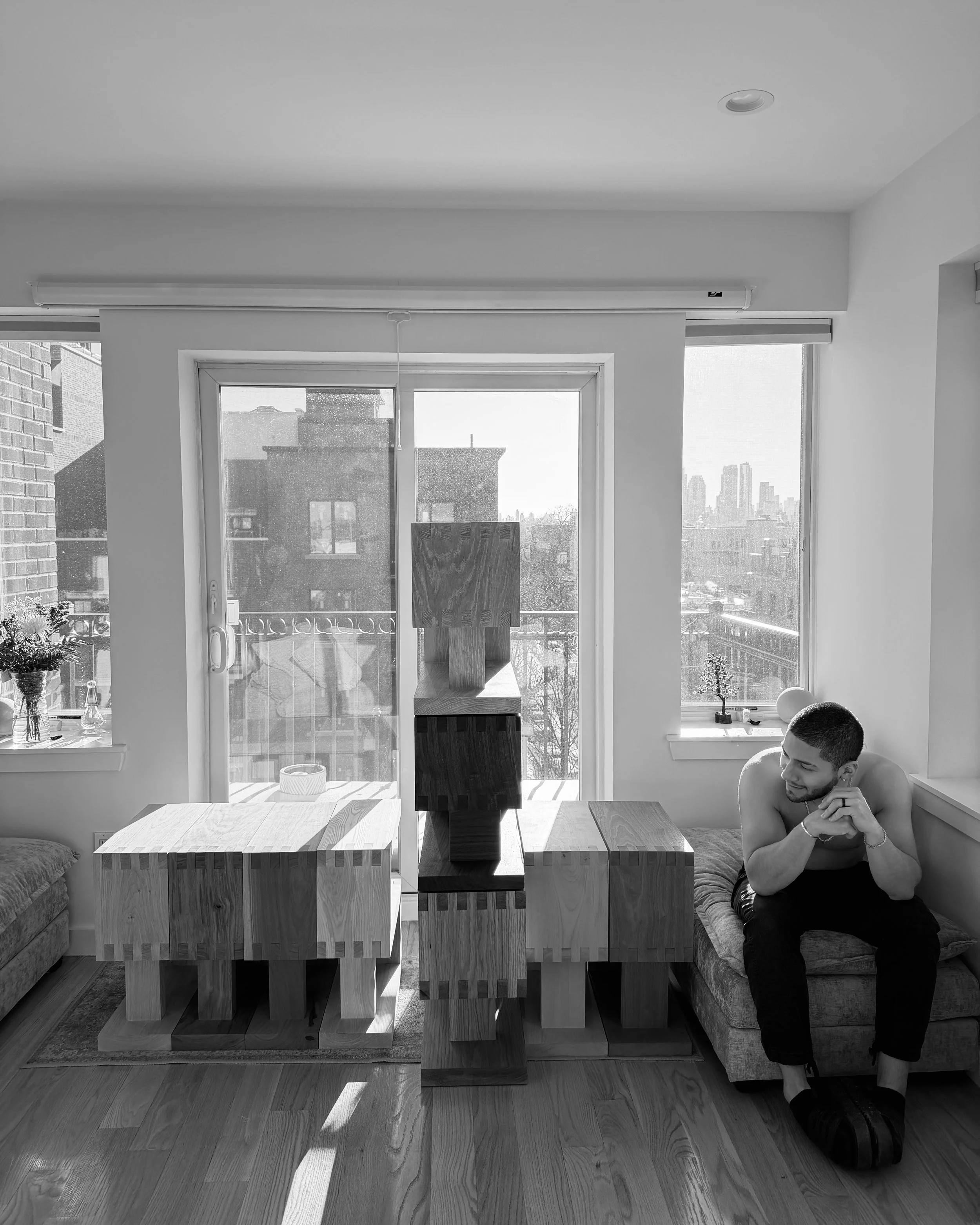
Built to hold presence in a room, not just fill space.
Milling Walnut
We start with rough walnut and bring it flat, square, and into proportion before any joinery is cut. This is where the piece starts to take shape and where the character of the wood begins to guide the build.
Fit Before Assembly
Before anything is glued together, we dry-fit the parts and check every joint. The goal is simple: clean connections, straight lines, and a piece that sits exactly the way it should.
Before the Finish
Once the piece is assembled, we sand it slowly and carefully, cleaning up the transitions without softening the shape. Before the final sanding pass, we raise the grain so the surface finishes cleaner and more evenly.